High-Performance Exterior Paints: Moisture Resistance, Elastomeric Science, and Application Protocols for Exterior Masonry
Selecting exterior paint for cement, concrete, and stucco surfaces requires balancing aesthetic goals with mechanical performance. Unlike interior drywalls, exterior masonry experiences thermal expansion, ground-water capillary draw, structural movement, and atmospheric UV degradation. Selecting the wrong coating matrix leads to premature blistering, flaking, efflorescence, and substrate degradation.
This guide analyzes high-performance exterior paint technologies—comparing pure acrylics, siloxanes, and elastomeric polymers—and outlines standard application protocols for maximum coating life.

Figure 1: Exterior masonry requires breathable, alkali-resistant coatings to prevent moisture entrapment.
1. Concrete & Stucco Failure Modes
Understanding coating performance requires looking at why standard latex paints fail on exterior masonry:
- Efflorescence: Water moves through porous cement, dissolving internal free-lime ($\text{Ca(OH)}_2$). As moisture evaporates at the surface, white calcium carbonate ($\text{CaCO}_3$) crystals form beneath or on top of the paint film, disrupting adhesion.
- Alkaline Degradation (Saponification): Fresh concrete and stucco carry a high pH balance ($\text{pH } 12\text{--}13$). Standard oil-based or alkyd paints react chemically with this alkali, breaking down into a sticky soap-like byproduct.
- Thermal Cracking: Cementitious substrates expand and contract during daily temperature cycles. Rigidity in standard films causes micro-cracking across structural joints.
- Hydrostatic Pressure Blistering: Sub-surface moisture pushing outward against a non-breathable film creates pressure bubbles, detaching the coating from the slab.
2. Chemical Comparison: Acrylic, Siloxane, and Elastomeric
| Coating Technology | Primary Polymer Chemistry | Permeability Rating | Tensile Elongation | Best Applied To |
|---|---|---|---|---|
| 100% Pure Acrylic | Cross-linking Acrylic Resins | High ($15\text{--}30\text{ Perms}$) | $50\%\text{--}100\%$ | Smooth stucco, cured concrete, cement board |
| Siloxane / Silicone-Enhanced | Organosilicon + Acrylic Hybrid | Superior ($30+\text{ Perms}$) | $20\%\text{--}50\%$ | Highly porous masonry, coastal exposure |
| Elastomeric Coating | High-Solids Isomeric Acrylic | Moderate ($5\text{--}10\text{ Perms}$) | $300\%\text{--}600\%$ | Cracked stucco, split-face block, tilt-up concrete |
Pure Acrylic Emulsions
Pure acrylic polymers provide high UV resistance and strong adhesion without yellowing. Their molecular structure remains flexible across mild temperature fluctuations while allowing internal water vapor to escape ($15+\text{ perms}$).
Silicone & Siloxane Hybrids
Siloxane coatings introduce hydrophobic chemical chains into the film matrix. Liquid water beads off the exterior surface, yet water vapor inside the wall escapes freely. This makes siloxane hybrids effective for freeze-thaw climates where trapped water causes spalling.
Elastomeric Coatings
Elastomeric paints are formulated at much higher dry-film thicknesses (DFT), typically yielding $10\text{--}12\text{ mils}$ per coat compared to $1.5\text{--}2.0\text{ mils}$ for standard acrylics. The elastomeric film stretches up to $600\%$ without rupturing, bridging hairline stress cracks ($< 1/16\text{ inch}$) in shifting walls.

Figure 2: Airless spraying ensures uniform film build needed for elastomeric elongation performance.
3. Pre-Application Protocol for Exterior Masonry
Phase 1: pH and Moisture Testing
- pH Testing: Use distilled water and pH indicator paper on raw concrete. If $\text{pH} > 10$, apply an alkali-resistant masonry primer or allow a full 28-day cure cycle for fresh concrete.
- Moisture Content: Test with an impedance moisture meter. Moisture levels must fall below $12\%$ ($15\%$ maximum for specialized siloxane primers) before coating.
Phase 2: Pressure Washing & Surface Conditioning
- Wash the surface at $2500\text{--}3000\text{ PSI}$ with a $15^\circ$ spray tip to remove chalking, dirt, and loose laitance.
- If efflorescence is present, apply a mild organic acid wash, scrub with a stiff nylon brush, and neutralize thoroughly with clean water.
Phase 3: Priming & Sealing
Apply a high-performance alkali-resistant acrylic masonry primer. This seals bare porous concrete, balances absorption rates across patched areas, and creates a chemically stable surface for the topcoat.
4. Coating Application & Maintenance Guidelines
To ensure maximum durability, follow these core application parameters:
- Ambient & Substrate Temperature: Apply when ambient and surface temperatures are between $50^\circ\text{F}$ and $90^\circ\text{F}$ ($10^\circ\text{C}\text{--}32^\circ\text{C}$). Avoid direct sunlight on hot walls, which causes flash-drying and pinhole voiding.
- Spray and Back-Roll Technique: Apply topcoats using an airless sprayer equipped with a `.017` to `.021` orifice tip. Back-roll immediately with a $3/4\text{-inch}$ heavy-nap roller cover to force the liquid coating into the porous texture of the masonry.
- Wet Film Thickness (WFT) Monitoring: Use a notch-style WFT gauge during application. Standard acrylics require $4\text{--}6\text{ mils}$ WFT per coat; elastomeric systems require $12\text{--}18\text{ mils}$ WFT per coat to achieve their rated elongation.
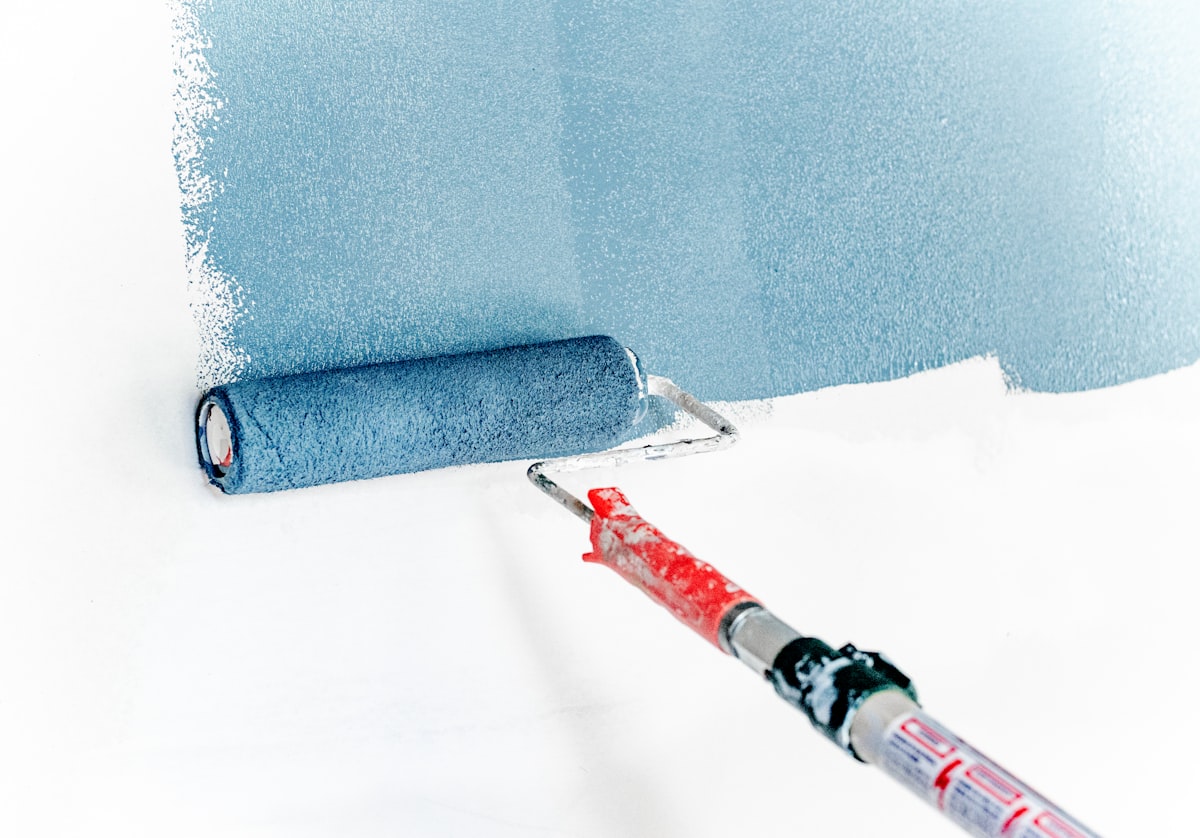
Figure 3: Completed exterior masonry protection system providing weather protection and color retention.


Comments
Post a Comment